
Technology trends in healthcare [2026].
The healthcare industry in the United States is undergoing profound change. Increasing demand, rising costs, professional shortages and new expectations from patients and healthcare teams are pushing many organizations to rethink how they operate. At the same time, innovation is no longer just about “what's new,” but about what's really new. improves the experience, reduces friction and helps to make better decisions.
The data reflect the magnitude of the challenge: healthcare spending in the U.S. reached 5.3 trillion dollars in 2024, approximately 18% of GDP, and forecasts indicate that it will continue to grow in the coming years. In such a large system, even small improvements in efficiency, training or communication can have a huge impact.
From Imascono Health, Imascono, the specialized healthcare division of the technology company Imascono, has been working for more than ten years with pharmaceutical companies, hospitals, healthcare professionals, laboratories and brands in the sector. Our day-to-day work consists of being very close to real needs: how to train better, how to explain complex science clearly, how to improve the patient journey and how to apply technology in a way that results in a better patient experience. useful and humane. With that in mind, we share some of the technology trends we see shaping 2026 and how they are already materializing in real projects.
Experiential events: when a booth becomes something memorable
Healthcare events are evolving at a rapid pace. Today, it is no longer enough to be present: brands need to be create an experience. Attendees have little time and are exposed to too many messages, so what really stands out are spaces that invite interaction, learning and participation.
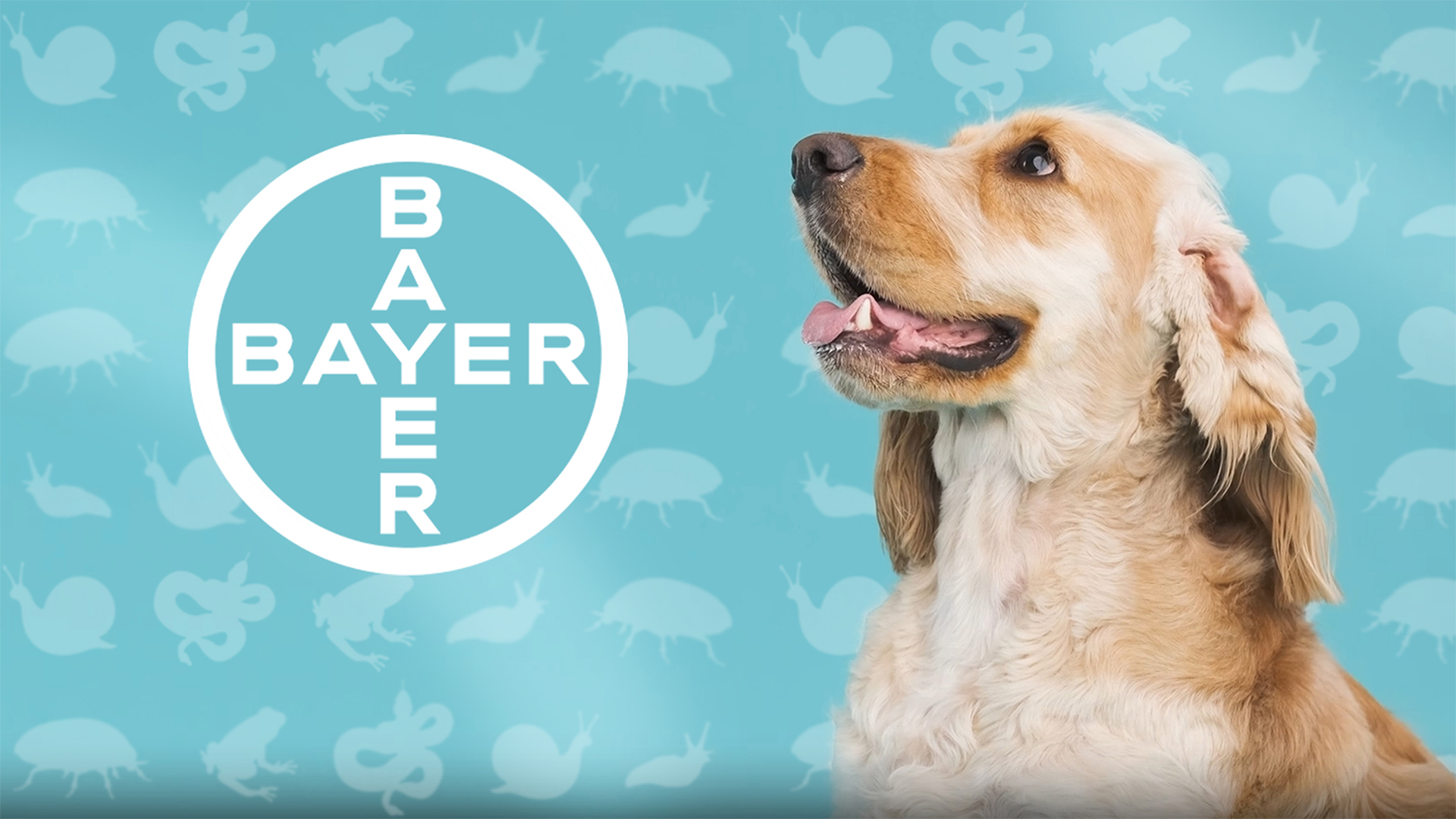
That's why we are seeing more and more “phygital” experiences that combine physical design with digital layers: immersive storytelling, gamification, interactive content and technology that makes the visitor the protagonist. In projects such as a Augmented Reality photocall and a game designed for Bayer, The goal was not simply to “make a visual impact”, but to generate real engagement, spark conversations and create a moment that people will truly remember.
Do you want to know more about Imascono Health's proposals?
Interactive marketing tools: explaining complex products without oversimplification
Health communication usually involves complex concepts: mechanisms of action, diagnostic pathways, devices, protocols, clinical evidence... The challenge is not to “simplify”, but to make information clear and useful without losing scientific rigor.
Here, interactive tools are becoming indispensable: intelligent visualizers, interactive infographics, 3D explainers or even AI assistants to support product communication. The “why” is simple: when professionals understand faster, the conversation improves, doubts are reduced and communication becomes more effective.
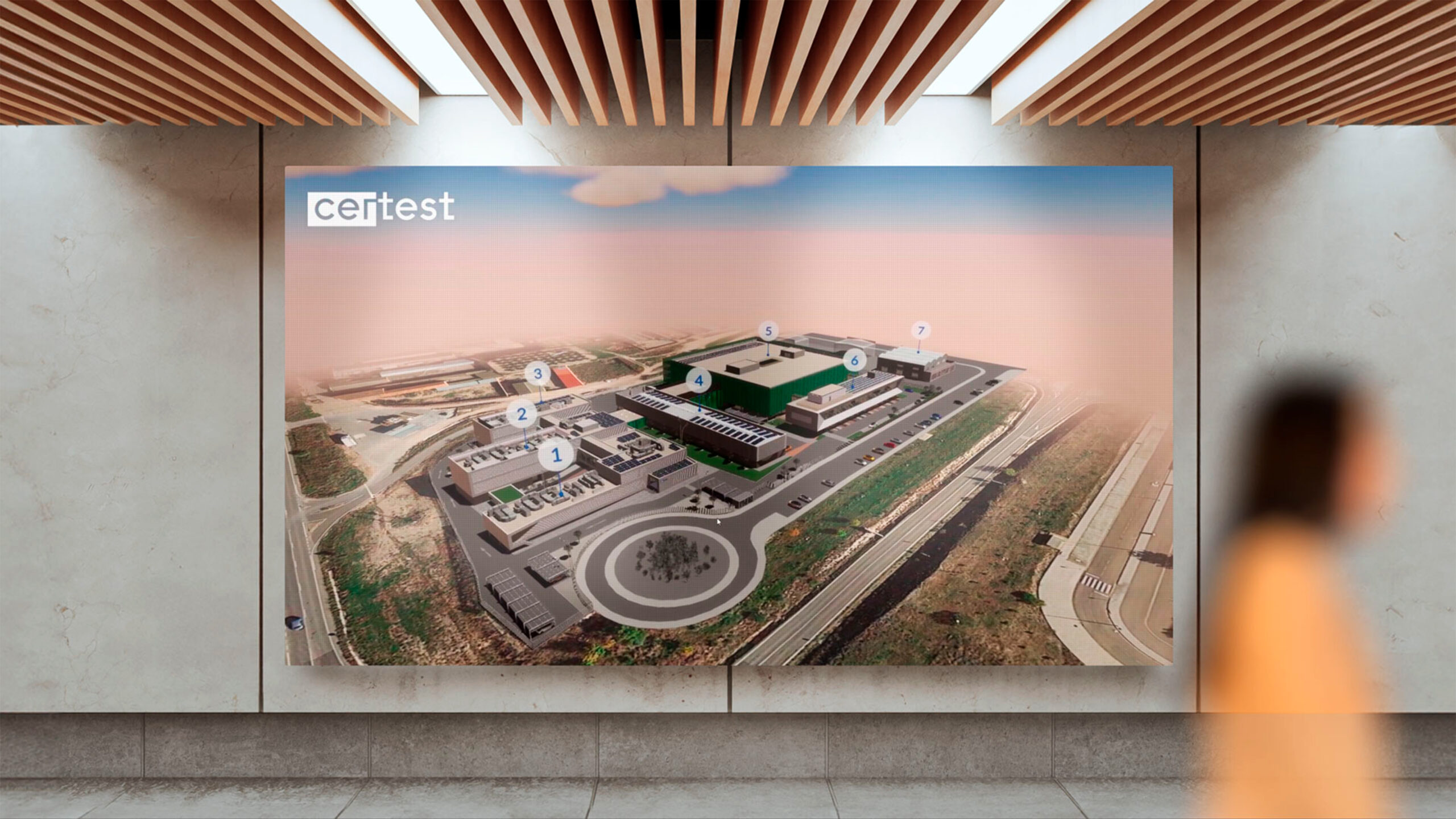
One example is the Certest Virtual Twina interactive digital replica of your industrial environment, designed to make a highly specialized biotechnology environment accessible from any location. The idea was not to show a building, but to generate clarity and confidence by explaining processes and capabilities in a transparent way.
Immersive training: learning by doing, without risk
Healthcare training is increasingly difficult to scale. Teams are distributed, time is limited, procedures are complex and consistency is key. That's why immersive learning - especially through Virtual Reality and simulations - continues to establish itself as one of the strongest trends for 2026.
The value goes beyond “better graphics”. Immersive training allows for repetition at no extra cost, risk-free practice and standardized results across teams. When the goal is to master a technique and gain confidence, experiential learning makes all the difference.
A good example is Virtual Experience Veterinarya VR training initiative developed for Boehringer Ingelheim in collaboration with the USDA. In the United States, strict biosecurity measures restrict access to poultry farms and controlled environments, making it difficult for trainees to perform internships. This solution recreates a complete farm, complete with health and safety protocols, so that future professionals can train in a realistic, controlled and safe environment.
Do you want to know more about Imascono Health's proposals?
Advanced technical content: digital-first, validated and designed for new formats
Scientific content is also changing. Today, health knowledge is consumed on screens, microforms, hybrid formats and interactive resources. That is why technical content can no longer be just “documentation”: it should be digital-first, The new, more visual and much easier to convert into real understanding.
Here the methodology is key: content built with health knowledge, reviewed by specialists and designed with clear narrative and attractive formats. The objective is not only to inform, but to ensure that the knowledge is retained and applied.
A good example is the project carried out with Vivacywhere a new technical video that explains in a clear and visual way how different active ingredients act on the skin. Educational, advanced and visually appealing content, capable of communicating efficacy and generating confidence in the product.

Interactive 3D anatomy: visualization as a new learning standard
Anatomy and procedures are best understood when they can be viewed, explored and interacted with. That's why interactive 3D anatomical models are becoming essential tools for education, training and product demonstration.
These models accelerate learning, reduce misunderstandings and bring clarity to complex concepts. In addition, they adapt to different environments: websites, presentations, touch screens, AR/VR experiences and professional training platforms.
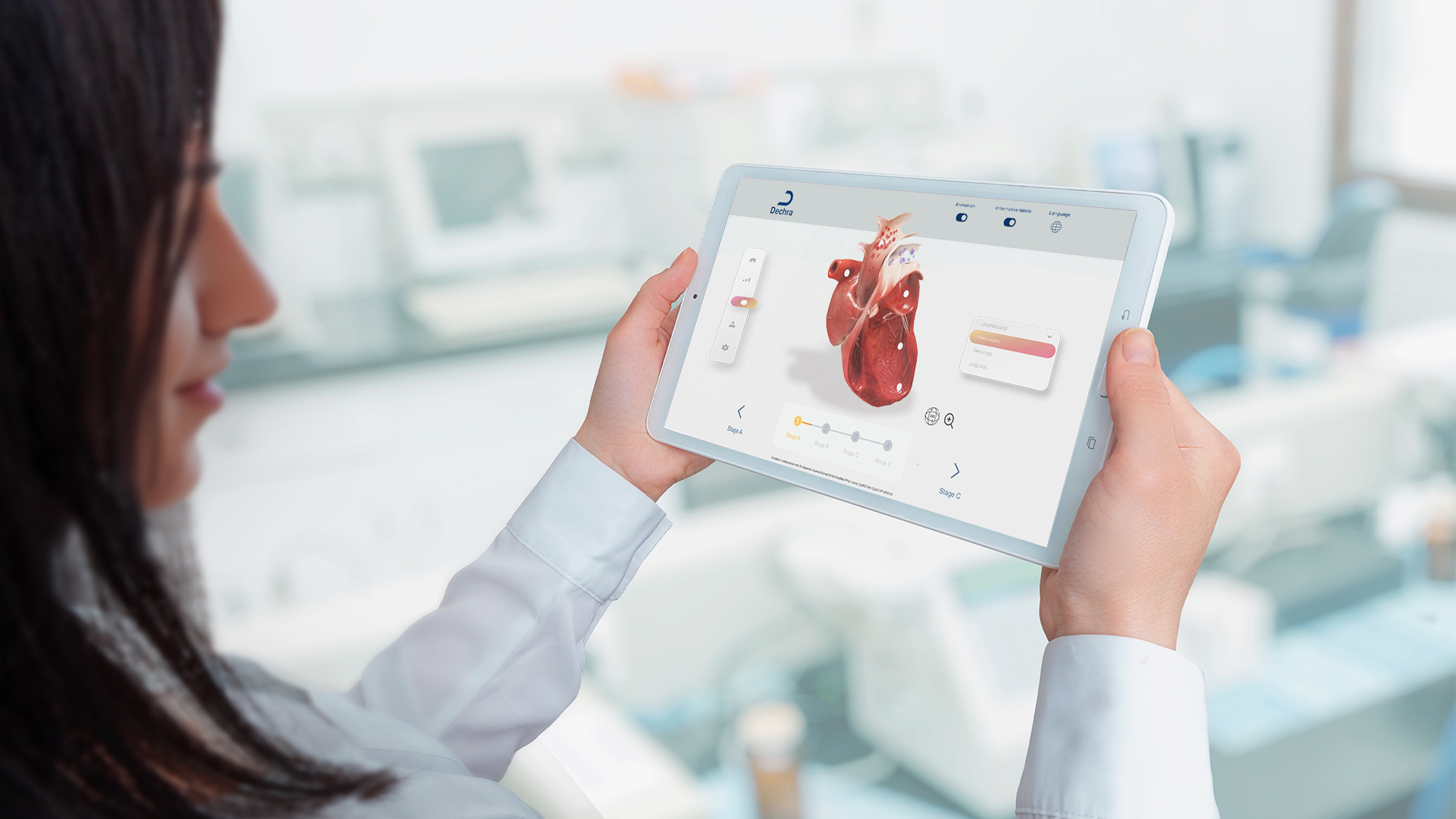
In animal health, the interactive anatomical model developed for Dechra shows perfectly why this trend is relevant: the goal was not to create 3D for aesthetics, but to reinforce clinical understanding and explain internal processes intuitively, accurately and reliably.
Tailor-made digital projects: the technology that works is the one that solves real friction
The most valuable digital transformation does not start with a tool, but with a real problem: patient orientation, accessibility, internal communication, onboarding, team building, process efficiency or uncertainty reduction at key moments.
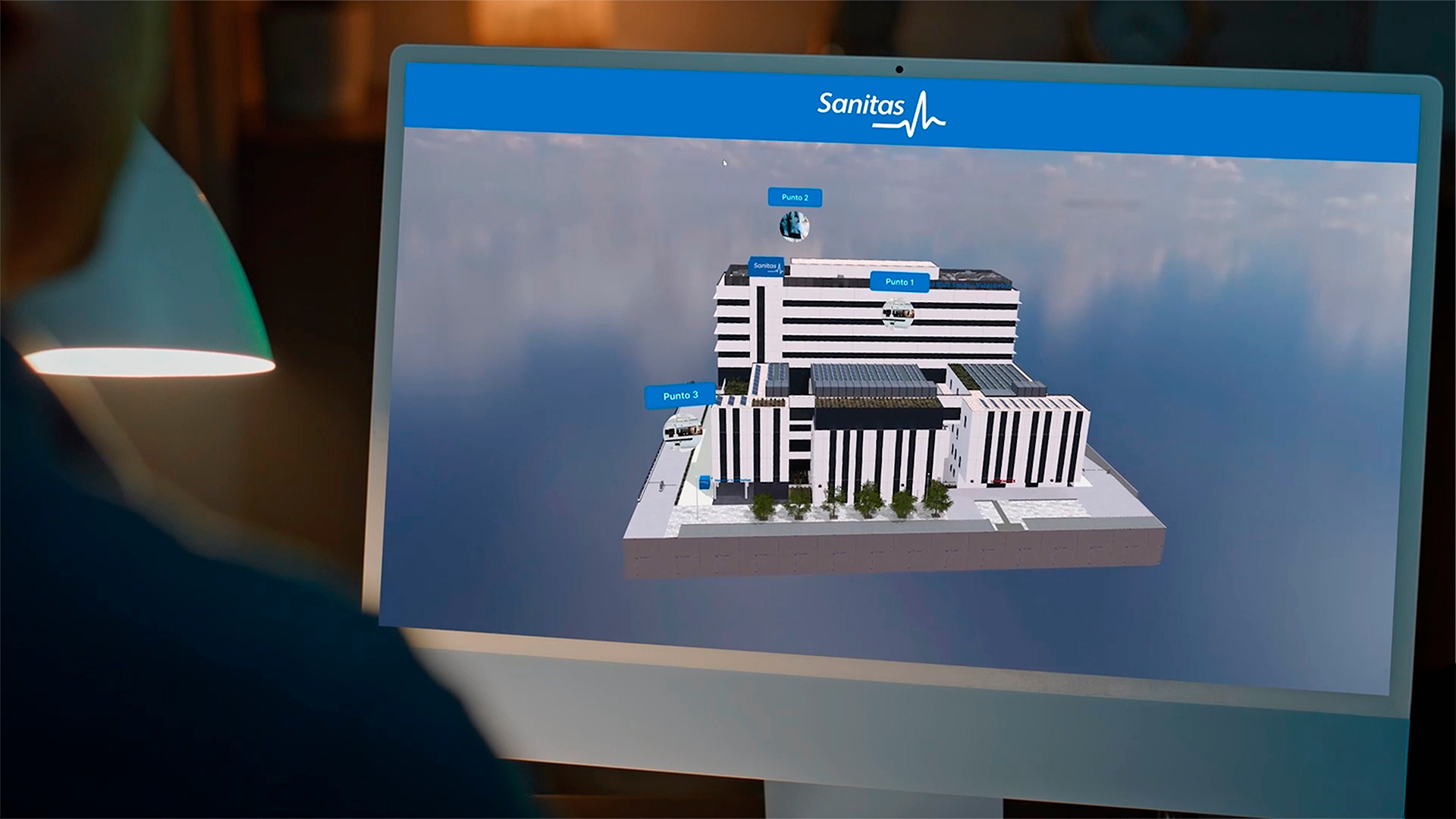
That is why one of the most important trends for 2026 is the growth of “tailor-made” projects, adapted to specific needs. One example is the Valdebebas Twina virtual recreation of the new Blua Sanitas Valdebebas Hospital, conceived as an interactive map of its facilities.
The purpose of such digital twins is not to provide a “virtual tour,” but to reduce friction: to help patients and visitors understand where to go, what services are available, and how to move around the facility with greater confidence. In large hospitals, that first experience matters much more than is sometimes perceived.
The next big leap: AI agents for continuous patient monitoring
If we had to highlight one major development for 2026, this would be it: AI-based assistants designed to accompany patients on a continuous basis, especially in chronicity. These systems can remember context, guide routines, answer frequently asked questions and escalate to the healthcare team when something relevant is detected.
The aim is not to replace the healthcare professional, but to expand capacity, reduce friction and improve adherence, helping the patient to feel accompanied between visits.
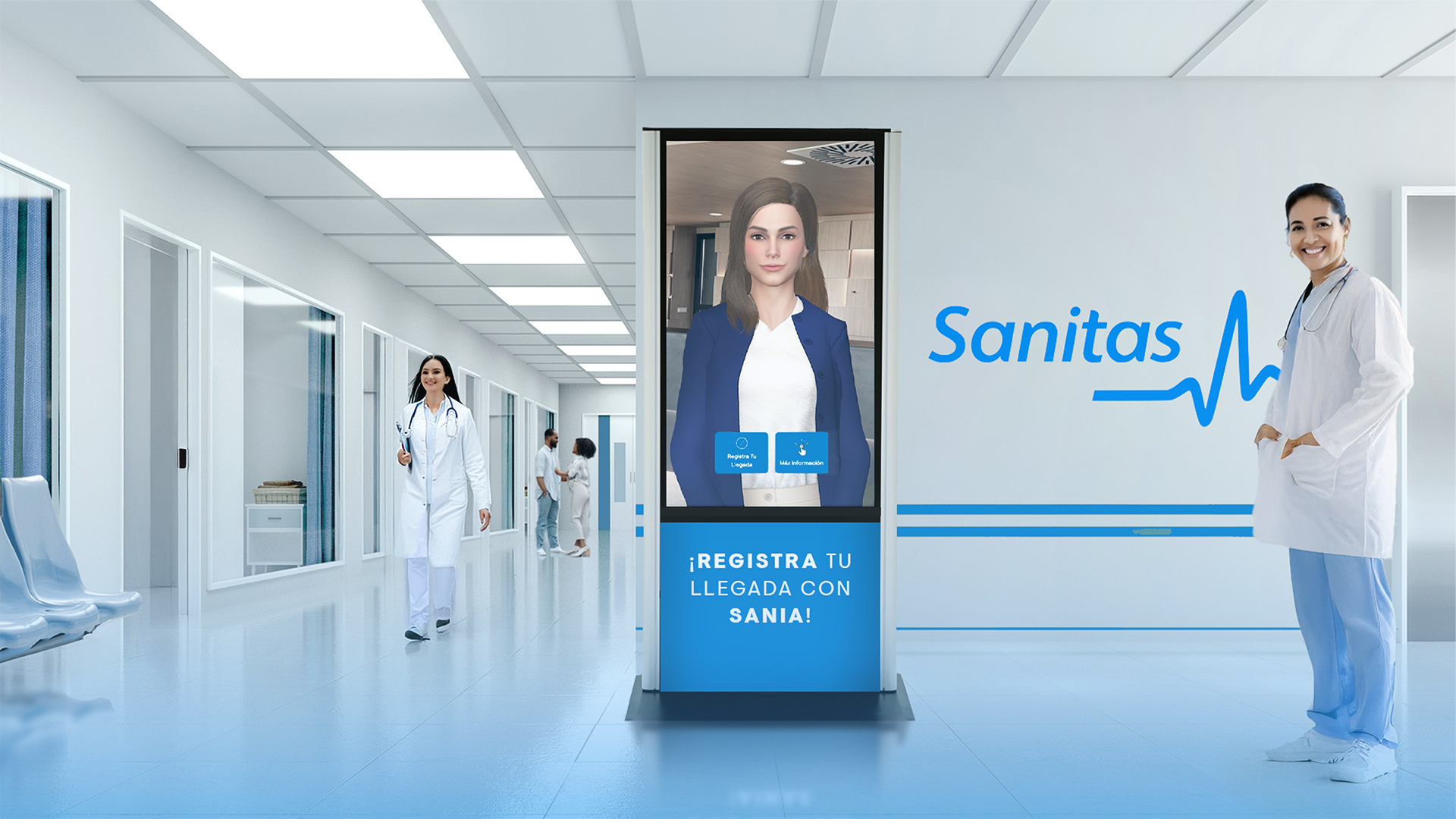
At Imascono we have been developing intelligent agents and conversational avatars for some time, and this base allows us to design solutions oriented to digital support and long-term engagement. An example of this is Sania, created together with Sanitas, The aim is to improve guidance and support within the hospital environment: helping patients to find answers and carry out procedures in a faster, more accessible and more humane way.
The 2026 healthcare technology trends have one thing in common: the initiatives that really work are the ones that improve the real lives of patients and professionals. Immersive experiences, hands-on training, digital technical content, 3D visualization and AI-based solutions are setting a new standard: more accessible, more scalable and more human.
If your organization is exploring any of these paths - immersive training, interactive scientific communication, 3D visualization, experiential events or intelligent agents - at Imascono Health We will be happy to share learnings and real-life examples to help you activate a meaningful initiative.
If you're interested, we'd love to connect with you.